Address
304 North Cardinal
St. Dorchester Center, MA 02124
Work Hours
Monday to Friday: 7AM - 7PM
Weekend: 10AM - 5PM
Address
304 North Cardinal
St. Dorchester Center, MA 02124
Work Hours
Monday to Friday: 7AM - 7PM
Weekend: 10AM - 5PM
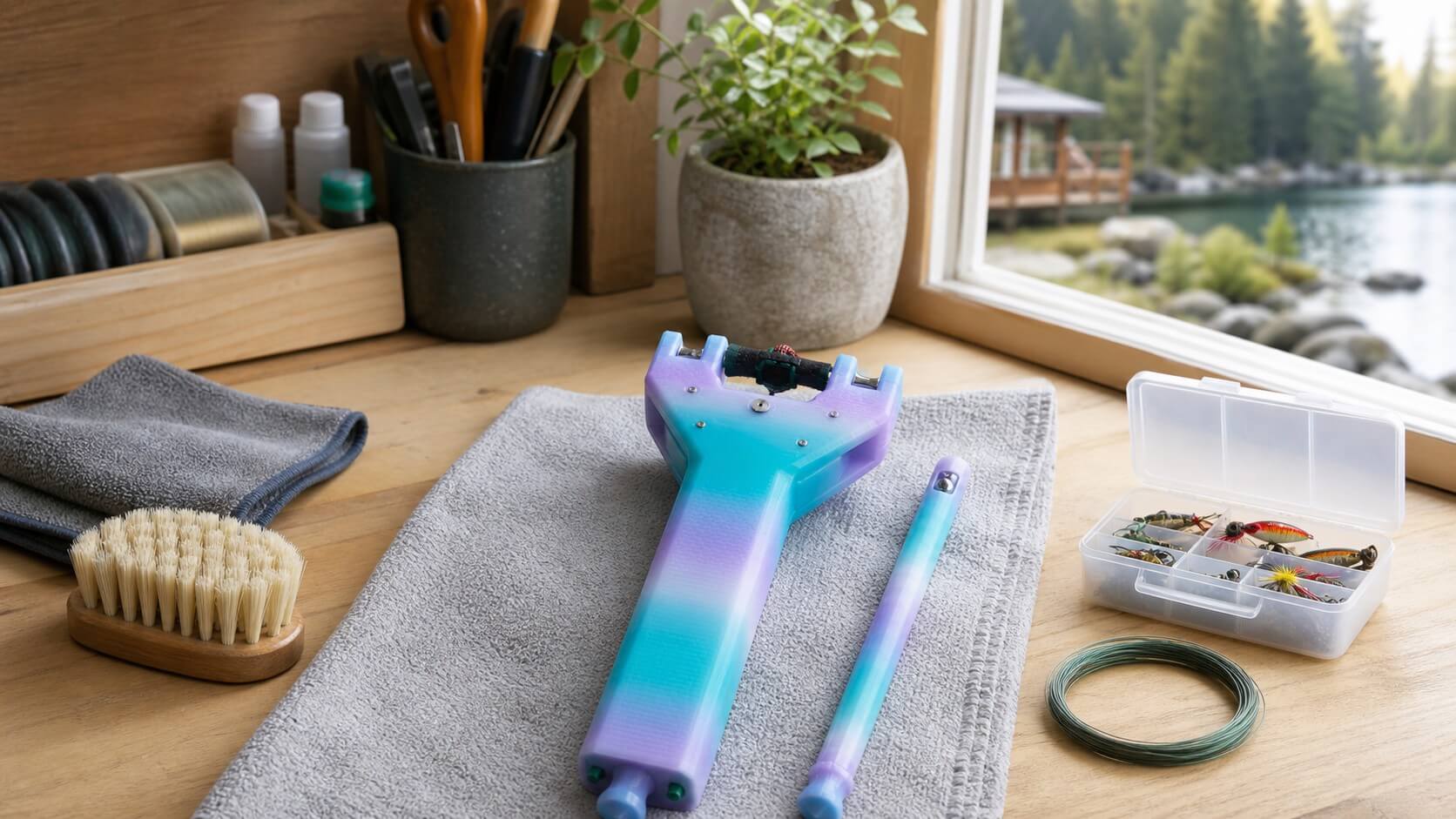
The end of a fishing trip is often the moment when equipment receives the least attention. It is tempting to place everything in a bag, return home, and deal with it another day. Unfortunately, trapped moisture, dirt, salt, bait residue, and tangled line can turn a small cleaning task into damaged or unreliable equipment.
A consistent care routine does not require a workshop full of specialist products. In most cases, careful inspection, gentle exterior cleaning, complete drying, and sensible storage provide a strong foundation. The exact procedure should always follow the instructions for your particular equipment, but the principles below apply to many common fishing tools.
Good maintenance starts at the fishing location. Secure hooks and other sharp tackle before packing. Remove visible weeds, mud, or debris so they are not carried into every compartment of your bag. Keep wet items separate from dry equipment when possible.
Check that all detachable parts have been collected. Small connectors and accessories are easier to find while you still remember where they were used. A simple parts checklist can be helpful when a product has more than one section.
Do not place wet equipment in a sealed container for longer than necessary. A bag may be convenient for transportation, but it can also hold moisture against the product during the journey home.
Before cleaning any fishing product, review the manufacturer’s guidance. Materials, coatings, moving parts, and electrical components may require different care. A method that is suitable for one tool may damage another.
Do not immerse a product unless the instructions clearly say that it is safe to do so. Being designed for use near water is not the same as being waterproof. Avoid directing water into openings, joints, controls, or internal areas.
If you do not know what cleaner is suitable, begin with the least aggressive method: a soft dry cloth or a lightly dampened cloth on the exterior. Strong solvents, abrasive pads, and household chemicals can affect finishes and plastic parts.
Allow heavy mud to dry only when the instructions and material make that approach appropriate; otherwise, wipe it away promptly with a soft cloth. A soft brush can help remove sand and dry debris from accessible exterior corners.
Do not force a brush, cloth, or tool into narrow openings. This can push contamination farther inside or damage a component. Pay attention to connection points, but clean only areas intended to be accessed by the user.
For equipment used around bait, remove residue before it hardens. Use separate cleaning materials for fishing equipment rather than cloths used for food preparation or personal items.
Salt can remain on surfaces after moisture evaporates. Equipment used near the sea generally needs prompt attention, but the correct cleaning method still depends on the product. Follow the supplied instructions for saltwater care and water exposure.
For suitable external surfaces, a clean lightly dampened cloth may help remove salt residue. Wipe again and dry thoroughly. Never assume that rinsing the whole product under a tap is acceptable.
Also inspect tackle, tools, fasteners, and storage containers. Salt transferred from one wet item can affect other equipment inside the same bag.
After cleaning, place equipment in a dry, ventilated indoor area away from direct heat. Open the tackle bag and storage compartments to release trapped moisture. Dry detachable exterior parts separately when the instructions allow them to be removed.
Avoid heaters, hair dryers, intense sunlight, or other high-temperature methods. Excessive heat can deform materials, weaken adhesives, or affect finishes. Air movement and time are safer than trying to accelerate drying aggressively.
Do not store equipment simply because the surface feels dry. Moisture may remain in fabric, joints, packaging foam, or the bottom of a tackle box. Give all parts enough time to dry before closing the container.
Cleaning is the best time to notice developing problems. Look for cracks, loose parts, abrasion, bent components, unusual movement, damaged line, and corrosion on accessible metal items. Compare connection points from both sides when possible.
If a part appears damaged, separate the product from ready-to-use equipment and label it clearly. This prevents it from being packed by mistake on the next trip. Contact the seller or manufacturer when repair or replacement advice is needed.
Avoid opening sealed housings or dismantling internal mechanisms unless the instructions specifically describe this as user maintenance. Unnecessary disassembly can cause damage and may affect warranty support.
Remove badly tangled or damaged line rather than forcing it into storage. Check knots and terminal tackle, then replace anything worn, bent, or corroded. Hooks should be dry and secured inside a suitable closed container.
Small detachable parts can be stored in labeled compartments or simple reusable bags. Keep parts belonging to the same product together. This saves preparation time and reduces the chance of trying to use an incorrect connector.
Do not pack sharp tackle directly against a product surface. Movement during transportation can create scratches or punctures even when both items appear secure.
Store fishing gear in a clean, dry place with moderate temperature and low humidity. Avoid damp basements, hot vehicle interiors, and locations exposed to prolonged direct sunlight. Keep equipment away from heavy objects that may press against it.
A padded bag, protective sleeve, or dedicated shelf can help prevent impact and deformation. Detachable sections should be positioned so that connection points are protected. Do not create tight bends in line or place unnecessary stress on moving parts.
For long-term storage, inspect equipment occasionally rather than leaving it untouched for an entire season. Check for moisture, pests, pressure damage, and changes in the condition of tackle or line.
Anglers with several products may benefit from a short note on a phone or inside a tackle cabinet. Record the date of the last use, any part that needs replacement, and whether the equipment was exposed to saltwater or heavy rain.
This does not need to become complicated. The purpose is to avoid discovering a known problem only after arriving at the water.
Well-maintained equipment is easier to trust and more pleasant to use. The most effective routine is also the simplest one you can repeat: remove debris, clean according to instructions, dry completely, inspect visible parts, secure sharp tackle, and store everything without pressure or trapped moisture.
At Fishing Roda, we recommend building fifteen minutes of care into the end of every trip. It protects your equipment, keeps your tackle organized, and makes the next day outdoors easier to begin. Treat maintenance as the final stage of fishing rather than a separate chore, and your gear will always be better prepared when it is time to return to the water.